
26 Aug Mediation, conciliation and agreements before a notary: in memory of Santiago García Ortiz
Mediation, conciliation and agreements before a notary: in memory of Santiago García Ortiz
On returning from the summer holidays, I learned some news that saddened me. Last April, Santiago García Ortiz, a notary, former student of La Salle Bonanova and someone with whom I had the opportunity to maintain a long professional relationship, passed away.
Santiago had a long professional career that took him through different notarial offices before eventually settling in Barcelona. He practised in Sants, on Passeig del Vapor Vell, and later moved his office to the area around Avinguda Josep Tarradellas, where he continued working until his retirement in 2020, during those particularly difficult months marked by the pandemic.
Throughout my professional career, I have worked with different notaries, but if I had to single out one of them, it would undoubtedly be Santiago. And not only because of his outstanding professionalism. What I particularly remember about him was his humanity, his approachable manner and his genuine curiosity about what his clients did. He took an interest in our companies, our projects, how they were developing and also in the people behind them.
There was something else that, in my view, particularly distinguished him. His interest was not limited to the signing room or to those moments strictly connected with a deed or transaction. Santiago encouraged informal conversations outside that setting. He enjoyed talking, asking questions, listening, learning more about our projects and finding out what we were doing.
He was a person of intellectual curiosity, with a desire to learn and an open, cosmopolitan outlook. This combination of professional rigour and personal warmth made dealing with him particularly pleasant.
He also knew how to surround himself with an excellent team, both professionally and personally. Among those who worked alongside him, I would particularly mention Pep Cruells, Lorena Alcántara and Natàlia, who helped make that notarial office a welcoming and trusted place for those of us who went there.
Mediation, conciliation and notarial practice: complementary professions
Remembering Santiago also leads me to reflect on an aspect of notarial practice that we perhaps do not always associate sufficiently with mediation, conciliation and Appropriate Means of Dispute Resolution (MASC).
When two people manage to resolve a conflict through mediation or conciliation, reaching an agreement is, naturally, the main objective. But another important question then arises: what do we do with that agreement?
Is signing it enough? Is it advisable to go to a notary? Can it be formalised in a public deed? What advantages can this offer?
The answer will depend on the circumstances of each individual case.
Can a mediation agreement be formalised in a public deed?
Yes. Spanish legislation on mediation in civil and commercial matters expressly provides that the parties may formalise a mediation agreement in a public deed before a notary so that it can become an enforceable instrument.
To do so, the requirements established by law must be met. The notary verifies compliance with those requirements and ensures that the content of the agreement is not contrary to law.
The involvement of a notary does not mean renegotiating what the parties have already agreed. The negotiation has taken place beforehand, with the involvement of the mediator or through the corresponding procedure. The notarial stage comes later, when the parties wish to give their agreement the appropriate legal form and effects.
And this can have considerable practical importance.
Consider, for example, a dispute between business partners, a debt between companies, financial obligations that must be fulfilled over a certain period of time, or particular property agreements where the parties want greater legal certainty.
This does not mean that every mediation or conciliation agreement has to be taken before a notary. For some agreements, a document signed by the parties will be sufficient. For others, because of their content or the legal effects the parties wish to achieve, it may be advisable or necessary to use another form of formalisation.
What matters is to consider each agreement individually and determine the most appropriate solution.
MASC and the importance of properly formalising agreements
This issue has become even more relevant given the growing importance of Appropriate Means of Dispute Resolution (MASC) within the Spanish legal system.
Spanish Organic Law 1/2025 has strengthened negotiation and MASC in civil and commercial matters and also regulates the effectiveness and formalisation of agreements reached through these procedures. The options provided for include formalisation in a public deed or, where appropriate, judicial approval.
For this reason, I believe that resolving a dispute should not be viewed solely from the perspective of getting two parties to reach an understanding.
Reaching an agreement is important. Formalising it properly is important too.
Mediators, conciliators, lawyers and notaries
My professional experience has led me to place increasing value on cooperation between different professionals.
A mediator facilitates communication between the parties, helps them identify their interests and enables them to develop their own solutions. A conciliator may take a more proactive role in helping the parties move closer together. Lawyers provide legal advice and protect the interests of their clients. Notaries provide the legal certainty inherent in their role and can become involved in the formalisation of certain agreements.
Their roles are different, but they can complement one another perfectly.
Furthermore, the contribution made by notaries is not limited to what happens after a dispute has arisen. A properly prepared deed, well-drafted articles of association, appropriate succession planning or a well-documented business transaction can help prevent many problems from arising later.
There is therefore an important conflict prevention role that also deserves recognition.
Resolving a conflict and ensuring that the solution lasts
As a lawyer, conflict mediator and conciliator in Barcelona, I work with family, business, corporate, neighbourhood, community and civil disputes of many different kinds.
An important part of my work involves helping people try to find a solution before their dispute ends up, or continues, in court. But once an agreement has been reached, I also consider it important to discuss with the parties how it should be documented and, when necessary, to involve the appropriate professionals so that it can be properly formalised.
No two conflicts are the same, and not every agreement requires the same legal solution.
That is precisely why I consider cooperation between mediators, conciliators, lawyers and notaries particularly valuable. It is not a question of replacing the role of one professional with another, but rather of understanding when each professional can add value.
And that brings me back to the reason for writing these lines.
Remembering Santiago García Ortiz is also an opportunity to recognise the contribution made by notaries to legal certainty and the prevention of disputes.
But for me, above all, it is the memory of an excellent professional and of a warm, curious person who took a genuine interest in the people and projects that came through his notarial office.
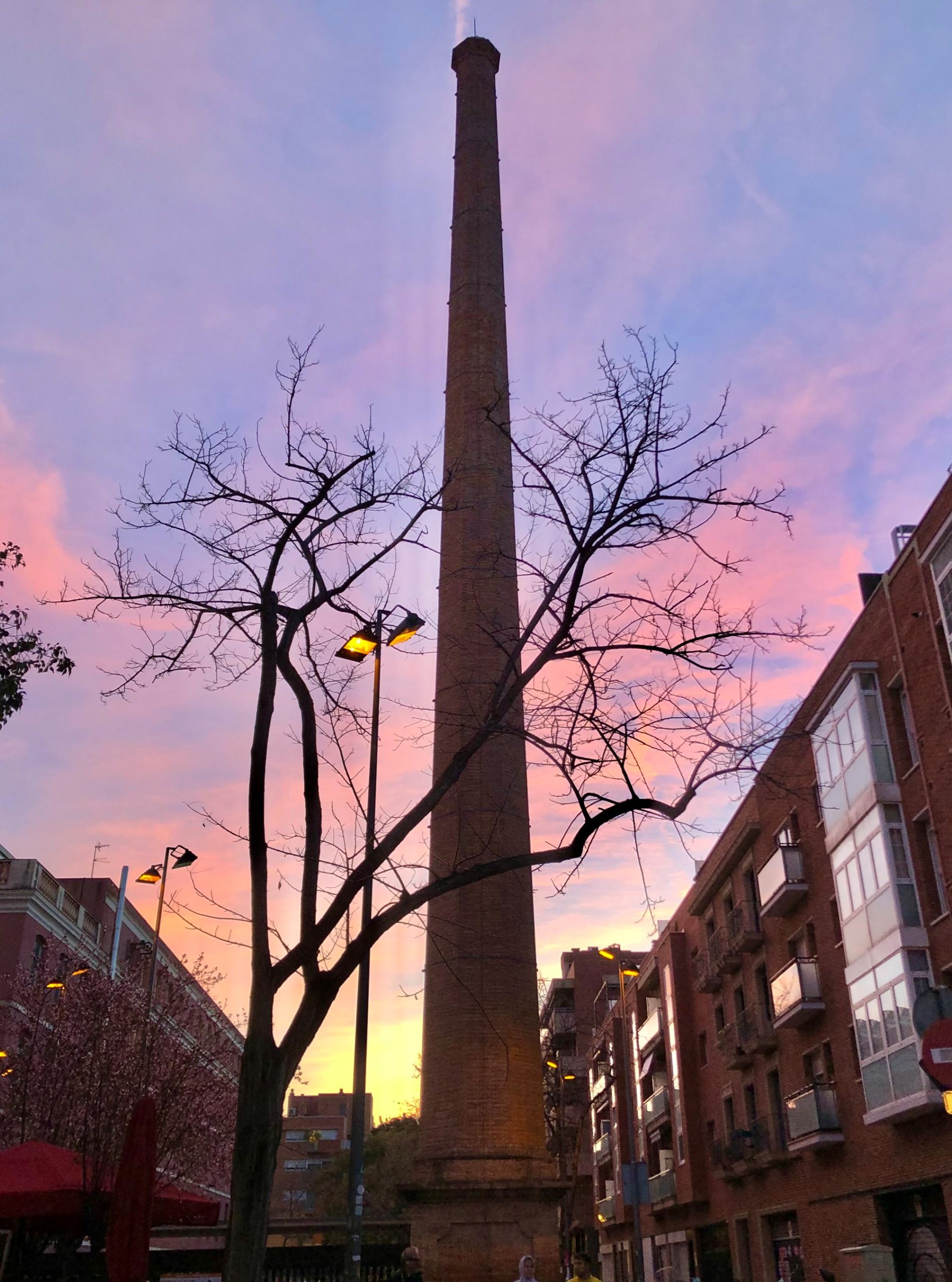
The photograph accompanying this article shows the chimney of the former Vapor Vell in Sants, Barcelona, a symbol of an area closely connected with one of the later stages of his professional career in the city.
I share this memory with gratitude for so many years of professional relationship.
Rest in peace, Santiago.
Contact
📞 +34 661 463 306
✉️ daniel@mediadorconflictos.com
🌐 mediadorconflictos.com
Daniel Sererols Villalón
Lawyer, conflict mediator and conciliator
Barcelona, Spain