
30 Aug Community mediation, neighbourhood festivals and coexistence
Community mediation, neighbourhood festivals and coexistence: preventing conflicts through dialogue
Barcelona, 29 August 2026
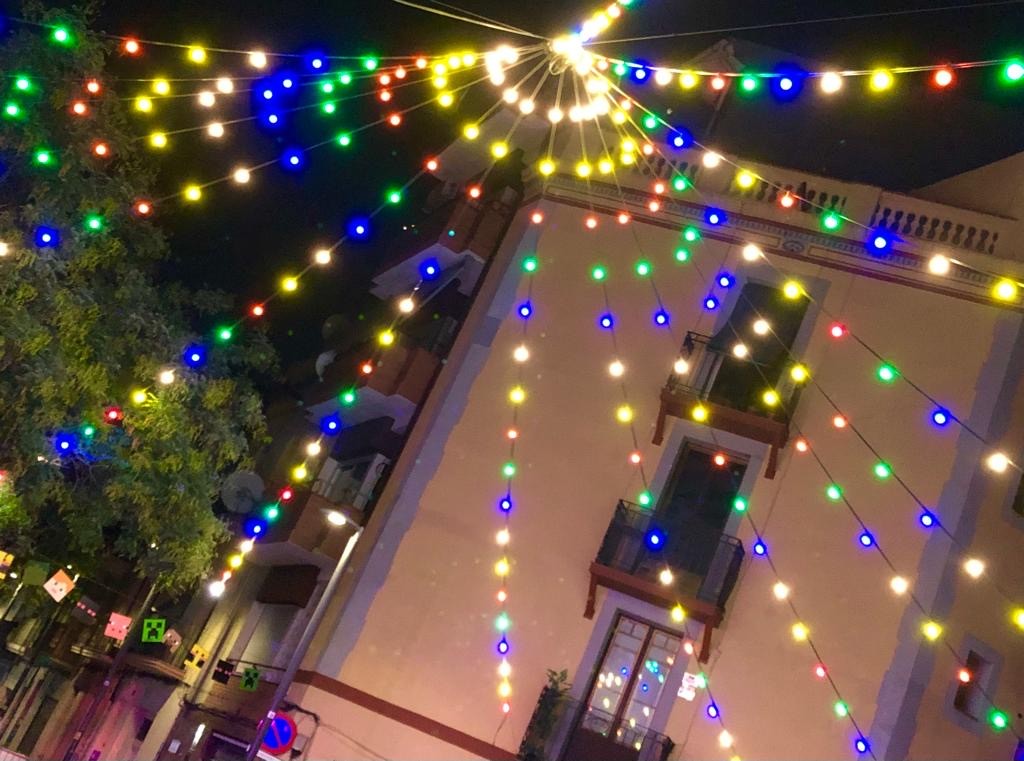
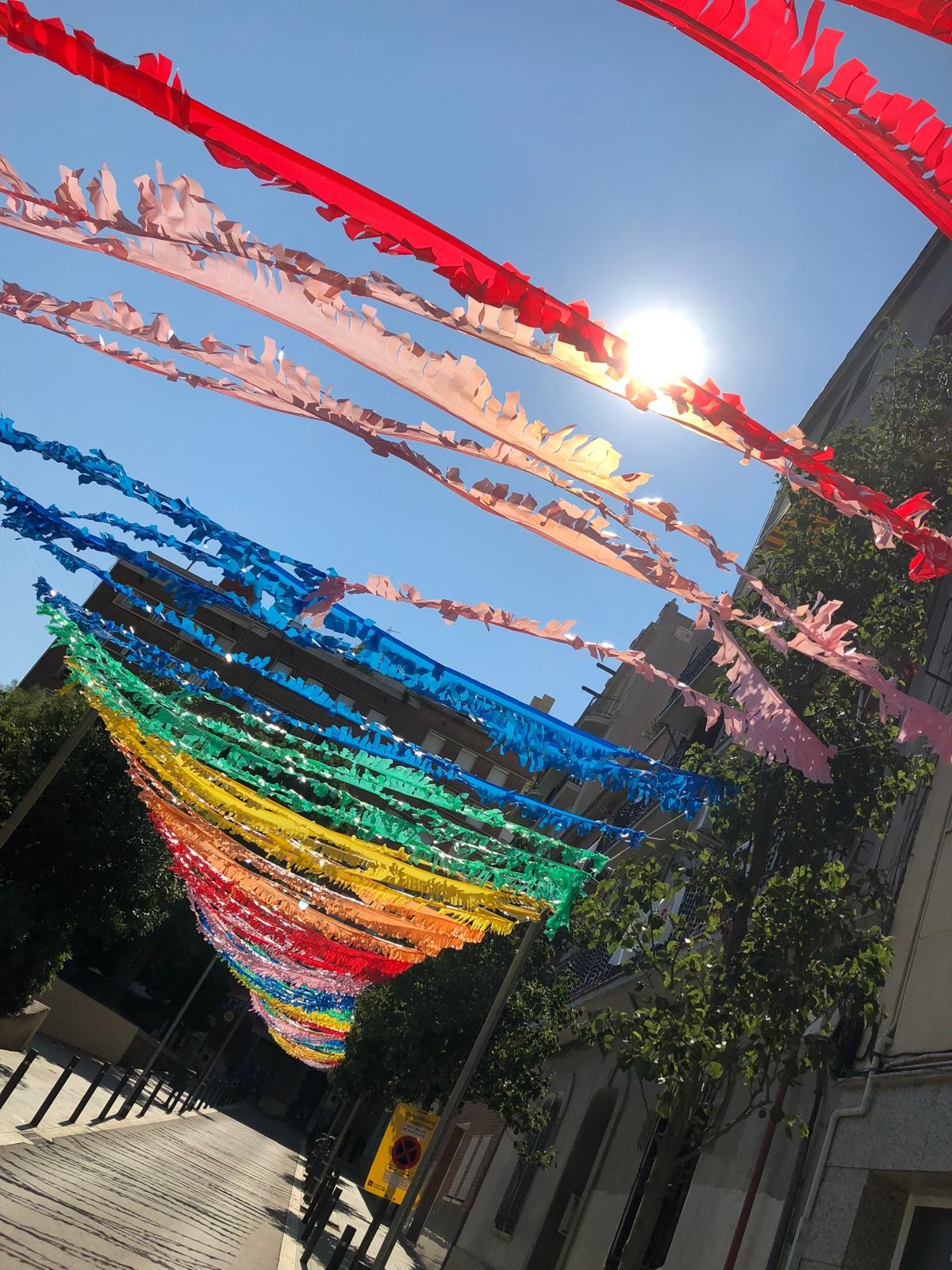
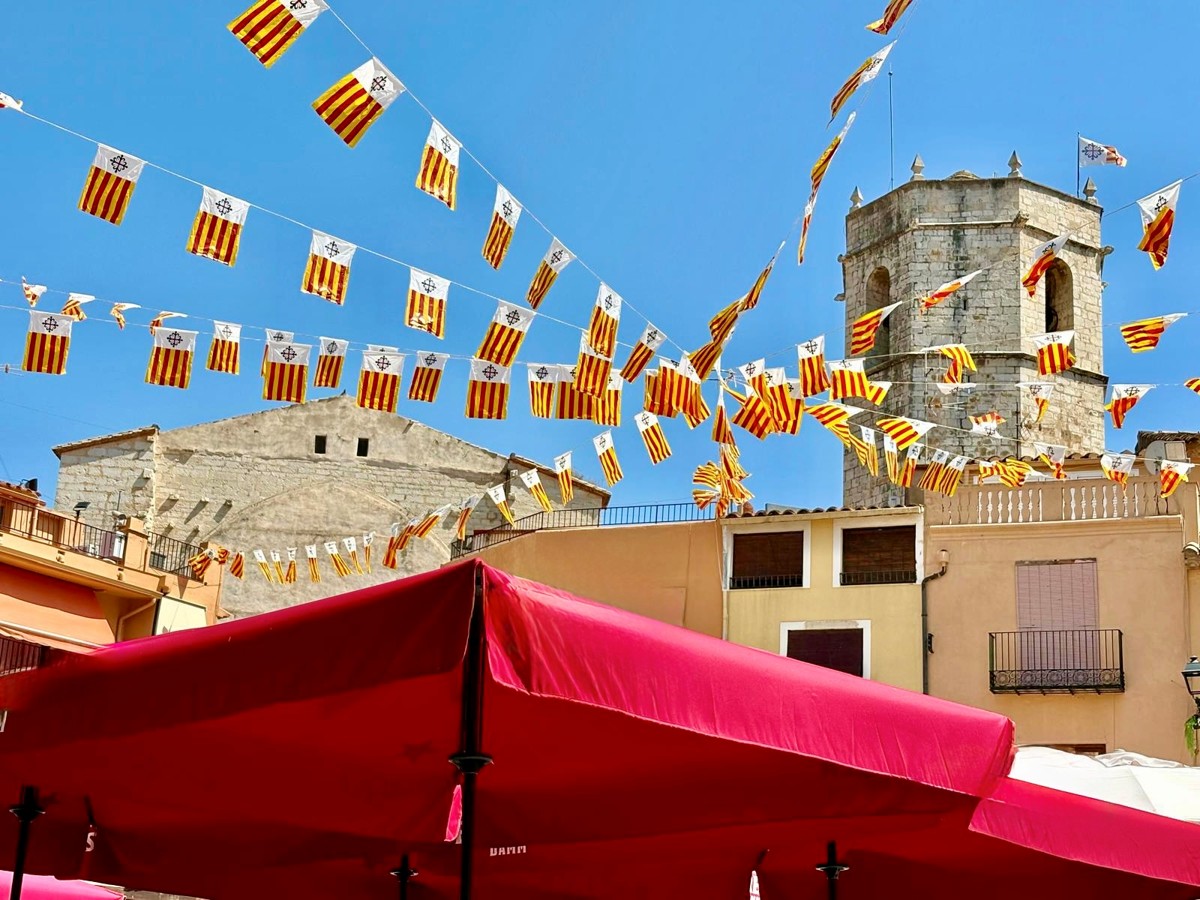
Today marks the end of the Festa Major de Sants and, with it, the Festa Major de la plaça de la Farga. It is a good moment to talk about neighbourhood festivals, community coexistence, community mediation and public space, but also to recognise the progress that has been made over recent years.
Neighbourhood festivals are part of the identity of our communities. They are spaces for people to meet, participate and connect with others who share the same streets and squares throughout the year. Behind these celebrations there are also many hours of voluntary work by individuals and organisations that dedicate their time and effort to making them possible.
But a neighbourhood festival takes place in a space that, at the same time, remains the place where many people live. And this is where one of the major challenges in terms of neighbourhood coexistence arises: how to reconcile the right to enjoy the festivities with residents’ right to rest and to continue with their everyday lives.
These interests are not necessarily incompatible. The problem arises when we treat them as if they were.
The experience of Plaça de la Farga
I know this reality particularly well because I have been a founding member of the Associació de Veïns i Veïnes de la Plaça de la Farga since 2010 and because, professionally, a significant part of my work is devoted to conflict mediation, particularly community and neighbourhood mediation.
This dual perspective has allowed me to observe over many years how coexistence and neighbourhood conflicts evolve within our communities.
At Plaça de la Farga, we have experienced more difficult periods as well as others in which significant progress has been possible. If I compare the current situation with that of several years ago, I sincerely believe that the evolution has been positive.
And I believe it is important to recognise the role played in this progress by the Comissió de Festes de la Plaça de la Farga.
I would particularly like to highlight the constructive approach of its president, Dani Català, as well as the work of everyone involved in the festival committee. Over time, there has been a genuine willingness to listen, talk and seek solutions that allow the festival to be integrated into the neighbourhood rather than becoming a source of confrontation with those of us who live there.
Naturally, there will always be aspects that can be improved. But it is equally important to recognise when things are moving in a positive direction.
Noise and neighbourhood conflicts
One of the main sources of conflict at festivals held in urban spaces is noise.
The debate is often reduced to determining how late music should be allowed or what the permitted decibel limit should be. These are important questions, but the reality is considerably more complex.
People who live near a stage know that not all frequencies are perceived in the same way. Bass frequencies, vibrations and certain types of reverberation can travel through façades and windows and be felt inside homes even when an overall noise measurement might appear reasonable.
Managing acoustic impact properly therefore requires more than simply complying with a timetable. It also means considering the orientation of sound equipment, power levels, bass frequencies, speaker placement and the specific characteristics of the surrounding environment.
I also believe it makes sense for amplified music to be linked to scheduled activities. When an activity ends, it is not always necessary to continue playing background music at a high volume simply because the sound equipment remains in place.
These are changes that can make an important difference to neighbourhood coexistence.
From confrontation to dialogue: the role of community mediation
For many years, in many places, conflicts surrounding neighbourhood festivals and nightlife have been approached from opposing positions.
On one side are those defending the festivities. On the other are those asking for their right to rest to be respected.
Framing the issue in this way can easily create a dynamic in which any request to reduce noise is interpreted as an attack on the festival, while any festive activity is perceived by residents as an intrusion or aggression.
Community mediation offers a different way of approaching these situations.
It is not about deciding who is right. It is about identifying what each party needs and looking for solutions that make it possible to reconcile legitimate interests.
In our experience at Plaça de la Farga, dialogue between the Comissió de Festes, the Associació de Veïns i Veïnes and the Sants-Montjuïc District has enabled gradual improvements to be introduced and a much more constructive relationship to develop.
This does not mean that every problem has been resolved or that we all think alike. It means something much more useful: we can talk about problems without turning each other into adversaries.
Another debate for the future: neighbourhood festivals and alcohol consumption
There is another issue that I believe deserves to be part of this discussion, and it extends far beyond Plaça de la Farga, Sants or even Barcelona.
I am referring to alcohol consumption associated with neighbourhood festivals and, particularly, drinking in public spaces.
I am not approaching this issue from a prohibitionist perspective. Nor do I believe that the debate should simply be reduced to whether or not alcohol should be sold. The underlying question is different: to what extent have we normalised the idea that celebration, entertainment, nightlife and alcohol consumption necessarily have to go together?
There may also be considerable room for improvement here.
We are all familiar with some of the most serious consequences of irresponsible alcohol consumption, particularly when someone subsequently drives a vehicle, operates machinery or carries out activities requiring attention and responsibility.
But there is another, much more everyday consequence that directly affects coexistence in our neighbourhoods and that those of us who live close to areas where celebrations take place know very well.
Excessive alcohol consumption can result in vomit, foul-smelling urine in streets, on façades and in building entrances, shouting, disregard for rules, antisocial behaviour and disorder that can extend beyond the area where the festival itself is taking place.
Added to this is the considerable and highly visible amount of waste that is routinely left scattered around nearby streets and spaces the morning after a festival: cans, bottles, plastic cups and other containers abandoned on pavements, in doorways, around tree pits and in other corners of public space.
There is another issue that should not be overlooked: the amount of public resources that subsequently have to be devoted to cleaning and restoring these areas. Cleaning services, staff, vehicles, water and other resources are needed so that, only a few hours later, the streets can return to reasonable conditions.
This is particularly striking because festival organisers and public authorities generally introduce measures intended to reduce these problems, including the provision of public toilets. Nevertheless, urine continues to appear in streets, on façades and in building entrances, while waste is still abandoned outside the places provided for its disposal.
There is therefore something that does not quite add up and that would be worth examining. Why, when toilets and facilities for disposing of waste are available, do some people continue to behave in this way?
There is probably no single explanation, but I believe it would be a mistake to completely separate this issue from excessive alcohol consumption. When such consumption leads to a loss of self-control, it can also reduce awareness of the most basic rules of coexistence and of the consequences our actions have for others.
For this reason, the debate about alcohol at neighbourhood festivals should not be considered solely from the perspective of health or road safety. It also has a dimension related to civic behaviour, coexistence, cleanliness, responsible use of public space and the use of resources that we all pay for.
This is not about blaming everyone who takes part in a festival. Clearly, the vast majority of people are perfectly capable of enjoying themselves while respecting their surroundings. It is about asking whether we can improve a model in which certain behaviours associated with festivities and excessive alcohol consumption appear to have become normalised.
A neighbourhood festival can be highly participatory, enjoyable and popular without alcohol necessarily having to play a central role and, above all, without those who live nearby having to deal the following morning with the consequences of antisocial behaviour by some of those who attended.
Community mediation can also be preventive
One of the aspects of community mediation that interests me most is precisely its preventive potential.
We should not always wait until complaints are filed, calls are made to the local police, grievances become recurrent or confrontation develops between residents and organisers.
Community mediation can begin earlier.
Before a neighbourhood festival takes place, potential areas of conflict can be identified, residents can be heard, the needs of organising associations can be understood, timetables can be reviewed, the location of stages and sound equipment can be assessed, areas where larger concentrations of people are likely to gather can be anticipated, and rapid communication mechanisms can be agreed upon to deal with incidents.
Issues such as responsible alcohol consumption, civic behaviour, waste generation and behaviour in the areas surrounding the festivities can also be addressed.
That, too, is community mediation: creating spaces for communication before disagreement develops into conflict.
I recently had the opportunity to discuss precisely these issues — community mediation, neighbourhood mediation and the importance of intervening before coexistence conflicts become entrenched — in an interview published by La Vanguardia.
In the interview, I explain what we mean by community mediation and how this area of mediation can address conflicts affecting a homeowners’ association, an apartment building, several buildings, a street or even an entire neighbourhood. We also discuss some of the most common neighbourhood conflicts and the importance of trying to restore dialogue before years of confrontation make finding a solution much more difficult.
Interview in La Vanguardia:
A festival that is part of the neighbourhood
After many years of involvement in community life around Plaça de la Farga, I believe this is precisely the direction we should take.
Neighbourhood festivals should not be experienced as something that occupies the neighbourhood for a few days, but as something that forms part of the neighbourhood itself.
Achieving this requires dialogue, a willingness to listen and a readiness to introduce changes when necessary.
The experience of recent years shows that progress is possible. That is why I would once again like to recognise the attitude of the Comissió de Festes de la Plaça de la Farga and, in particular, its president, Dani Català, whose willingness to engage in dialogue has helped maintain a constructive relationship with local residents.
There will always be things that can be improved. Noise, timetables, the use of public space, civic behaviour, waste and responsible alcohol consumption will continue to present challenges.
But this is precisely where the value of dialogue and community mediation lies.
Coexistence does not mean that some people have to give up the festivities or that others have to give up their right to rest. It means understanding that we share the same space and that the most lasting solutions emerge when we are able to talk, listen and seek a reasonable balance.
Today marks the end of the Festa Major de Sants 2026. Tomorrow, Plaça de la Farga will return to its everyday life.
And perhaps that is precisely the best measure of a successful neighbourhood festival: when the music ends and the stages are dismantled, the festivities and the people who live there can continue to be part of the same community.
More about community and neighbourhood mediation
To explore further the relationship between neighbourhood associations, conflict prevention, coexistence and community mediation, you can also read my article:
Neighbourhood movements and community mediation: building a better Barcelona through dialogue
Daniel Sererols Villalón
Lawyer · Conflict Mediator · Private Conciliator
Community and Neighbourhood Mediation · Conflict Prevention and Resolution
Barcelona and Catalonia
📞 661 463 306
📧 daniel@mediadorconflictos.com
🌐 www.mediadorconflictos.com