

11 Oct Reform of Alternative Dispute Resolution Requirements in Family Cases Involving Minors Put on Hold
Reform of Alternative Dispute Resolution Requirements in Family Cases Involving Minors Put on Hold Following Spain’s General Election Announcement
11 October 2026
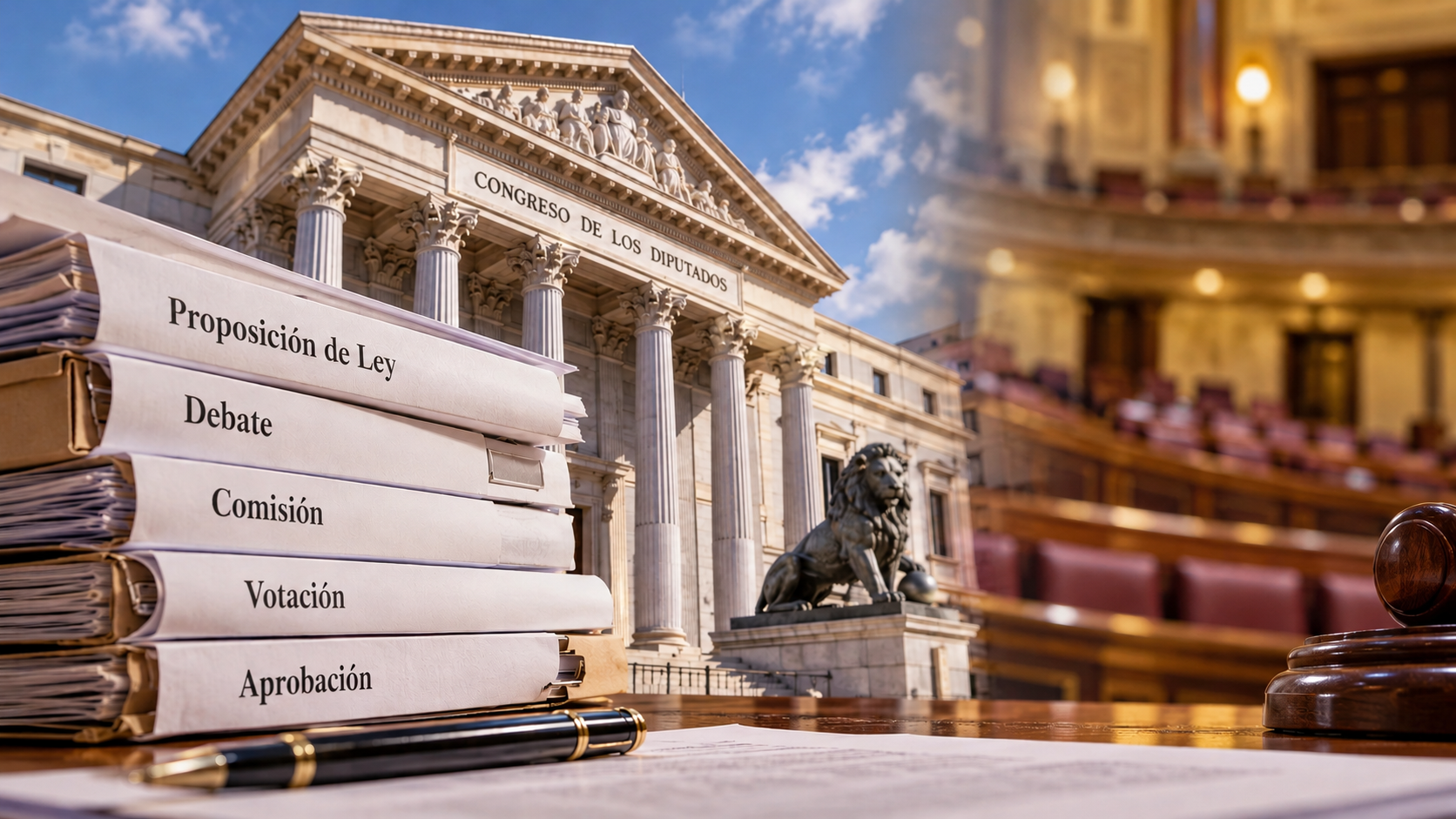
The dissolution of the Spanish Parliament has brought the legislative process to a halt for a proposed reform aimed at removing the requirement to attempt an appropriate form of dispute resolution (known in Spain as MASC) before initiating certain family court proceedings involving minor children. Spain’s Organic Law 1/2025 remains in force and, for the time being, the legal requirements for bringing these matters before the courts remain unchanged.
The announcement of a general election scheduled for 29 November has had a consequence that may have gone largely unnoticed by the general public, but which is of particular interest to professionals working in family mediation and family law.
One of the legislative initiatives affected is the bill introduced by the Basque Nationalist Party (PNV) to amend Organic Law 1/2025 of 2 January, concerning measures to improve the efficiency of Spain’s public justice system.
The proposal sought to exempt certain family court proceedings involving minors from the requirement to demonstrate that an attempt had been made to resolve the dispute through negotiation before initiating legal proceedings.
This was a significant proposed reform, particularly because it concerned an area in which mediation has traditionally played an important role: disputes arising from separation, divorce and disagreements between parents.
What Does Spain’s Organic Law 1/2025 Currently Require?
Since the relevant provisions of Organic Law 1/2025 came into force on 3 April 2025, parties in many civil proceedings in Spain have been required to demonstrate that they have previously attempted to resolve their dispute through negotiation before filing a claim in court.
In Spanish procedural law, this is known as a requisito de procedibilidad, or procedural precondition for bringing a claim.
The legislation recognises various appropriate means of dispute resolution, referred to in Spain by the acronym MASC (Medios Adecuados de Solución de Controversias). These include mediation, conciliation and other forms of negotiation between the parties.
One point deserves particular clarification, as it often causes confusion: the law does not necessarily require parties to participate in mediation. Rather, in proceedings where the requirement applies, parties must demonstrate that they have attempted to resolve their dispute through one of the legally recognised methods.
In family matters, this requirement also applies to certain proceedings involving minor children, subject to the exceptions established by law.
Why Was an Amendment to the Law Being Considered?
The Madrid Bar Association (Ilustre Colegio de la Abogacía de Madrid, ICAM) had publicly expressed concerns about the possible consequences of this requirement in family court proceedings involving minors.
Its main argument was that requiring prior negotiations could delay access to the courts and, consequently, the adoption of judicial decisions on sensitive matters such as child custody, child maintenance and arrangements for children to spend time with each parent.
From this perspective, it was argued that protecting the best interests of the child should take precedence over the obligation to complete a preliminary negotiation procedure.
These concerns were subsequently reflected in a bill introduced by the Basque Parliamentary Group (EAJ-PNV), proposing amendments to Organic Law 1/2025 and Spain’s Civil Procedure Act (Ley de Enjuiciamiento Civil).
It is important to emphasise that the initiative was not intended to prohibit family mediation or prevent parents from choosing to participate in it voluntarily.
The proposal sought to remove the obligation to attempt an appropriate dispute resolution procedure before initiating certain family court proceedings involving minors, while preserving the possibility of mediation whenever the parties considered it appropriate.
A Proposal That Had Received Broad Parliamentary Support
The bill, registered with the Spanish Congress of Deputies under parliamentary file number 122/000247, was accepted for consideration on 22 September 2026.
The vote produced a significant result: 340 votes in favour, 7 against and no abstentions.
This broad support allowed the proposal to proceed through the legislative process, after which it was referred to the Justice Committee.
However, a parliamentary vote to consider a bill does not mean that the legislation has been definitively approved. The proposal still had to pass through several parliamentary stages before it could become law.
It was at this point that the announcement of an early general election changed the situation.
What Happens to the Reform Following the Dissolution of Parliament?
Spanish Royal Decree 806/2026 of 5 October, published in the Boletín Oficial del Estado (Spain’s Official State Gazette) on 6 October, dissolved both the Congress of Deputies and the Senate and called a general election for 29 November 2026.
Under Article 207 of the Rules of Procedure of the Congress of Deputies, the dissolution of Parliament generally results in the discontinuation of parliamentary business that has not yet completed the legislative process, subject to the exceptions relating to matters constitutionally assigned to the Permanent Deputation (Diputación Permanente).
This means that the bill introduced by the PNV cannot continue its parliamentary progress during the legislature that has now ended.
If the reform is to be pursued again, a new legislative initiative will have to be introduced before the Parliament formed following the election, and the corresponding legislative procedure will have to begin again.
Naturally, the legal analysis and parliamentary work already undertaken will remain relevant to future discussions. However, from a formal legislative perspective, a new procedure will be required.
What Could Happen During the Next Parliamentary Term?
At present, it is impossible to know.
Whether the proposal is revived will depend on the composition of the new Congress of Deputies, the priorities of the different parliamentary groups and their willingness to revisit the proposed reform.
A similar bill could be introduced, a different amendment could be considered, or the initiative might not be pursued again.
The parliamentary support received in September is a relevant precedent, but it does not guarantee that the reform will be adopted during the next parliamentary term.
In the meantime, one point must remain clear: Spain’s Organic Law 1/2025 continues to be fully in force.
Consequently, the procedural requirements established by the law continue to apply to proceedings falling within its scope, subject to the legally recognised exceptions.
The dissolution of Parliament does not automatically amend existing legislation or remove the obligation to attempt a negotiated resolution in cases where this is currently required.
Family Mediation: An Opportunity to Reinforce the Principle of Voluntary Participation
Beyond the legislative debate, this situation invites us to reflect on an issue that I consider particularly important for the future of family mediation.
Mediation is a process based on voluntary participation, mutual respect, confidentiality and the involvement of an impartial and neutral mediator.
Its purpose is not to replace the courts, but to offer people an opportunity to manage their differences through dialogue and the search for mutually acceptable agreements.
In family disputes, particularly where minor children are involved, this approach can be especially valuable.
Separation or divorce does not bring parental responsibilities to an end. Parents must continue making decisions about their children’s education, health, activities and many other aspects of everyday life.
Where circumstances allow, family mediation can help improve communication, reduce confrontation and facilitate agreements that take into account the needs of all family members, particularly those of the children.
However, not every dispute is suitable for mediation, and not every family situation provides the conditions necessary for a fair and effective mediation process. Situations involving violence, coercion or significant power imbalances require particularly careful assessment. Where mediation is prohibited by law, it cannot be used.
For this reason, I believe the debate should not be limited to deciding whether appropriate dispute resolution procedures should be mandatory in certain court proceedings.
We should also ask ourselves how we can help people better understand mediation, appreciate what it can offer and choose to participate because they have confidence in the process, rather than simply because they need to fulfil a legal requirement before bringing a case to court.
Mediation that is freely chosen, undertaken with a clear understanding of the process and supported by a genuine willingness to engage in dialogue can provide particularly favourable conditions for addressing family disputes.
This does not mean disregarding the value of appropriate dispute resolution procedures or questioning the role they may play in reducing litigation.
It means recognising that the quality of a mediation process should not be measured solely by the number of cases initiated, but also by its ability to help people manage their disagreements.
A Debate That Will Remain Open
The announcement of an early general election has interrupted a proposed reform that had attracted attention within the legal profession and among mediation practitioners.
For the time being, no legislative change has taken place. Organic Law 1/2025 remains in force, and we will have to wait until the next parliamentary term to see whether the initiative is revived.
Meanwhile, I believe this debate provides a valuable opportunity to continue explaining what family mediation really involves, the benefits it can offer and the circumstances in which it may be appropriate.
As a lawyer and conflict mediator based in Barcelona, I believe mediation should continue to develop as a useful option for people who wish to manage their differences without necessarily turning every disagreement into court proceedings.
I also believe it is essential to communicate a simple idea: mediation should not be perceived merely as a procedural formality that must be completed before going to court.
The real challenge is to encourage people to choose mediation because they see it as a genuine opportunity to resolve their conflicts.
Looking for Mediation or Conciliation Services in Barcelona?
If you are facing a family, neighbourhood, community, commercial or professional dispute and would like to explore whether mediation or conciliation could help you find a solution, please feel free to contact me.
As a lawyer, conflict mediator and private conciliator, I provide mediation and conciliation services in Barcelona and throughout Catalonia, both in person and online.
I offer a free initial 15-minute telephone consultation, during which we can briefly discuss your situation, address your initial questions and consider whether mediation or conciliation may be appropriate for your dispute.
This initial conversation does not involve any obligation to engage my services.
If you would like further information or wish to discuss your case, I will be pleased to assist you.
Daniel Sererols Villalón
Lawyer, Conflict Mediator and Private Conciliator
Family, Community, Neighbourhood and Commercial Mediation
Telephone: +34 661 463 306
Email: daniel@mediadorconflictos.com
Website: https://www.mediadorconflictos.com
Consultations: In person in Barcelona and online
Sources and References
- Spanish Organic Law 1/2025 of 2 January, consolidated text.
- Spanish Congress of Deputies. Bill introduced by the Basque Parliamentary Group (EAJ-PNV), parliamentary file 122/000247.
- Madrid Bar Association (ICAM). Institutional statements concerning appropriate dispute resolution procedures in family court cases involving minors.
- Spanish Royal Decree 806/2026 of 5 October, concerning the dissolution of Parliament and the calling of a general election.
- Rules of Procedure of the Spanish Congress of Deputies, Article 207.