
24 Oct 28th Mediation Conference in Barcelona
Mediation and Vulnerability: Reflections on the 28th Mediation Conference in Barcelona
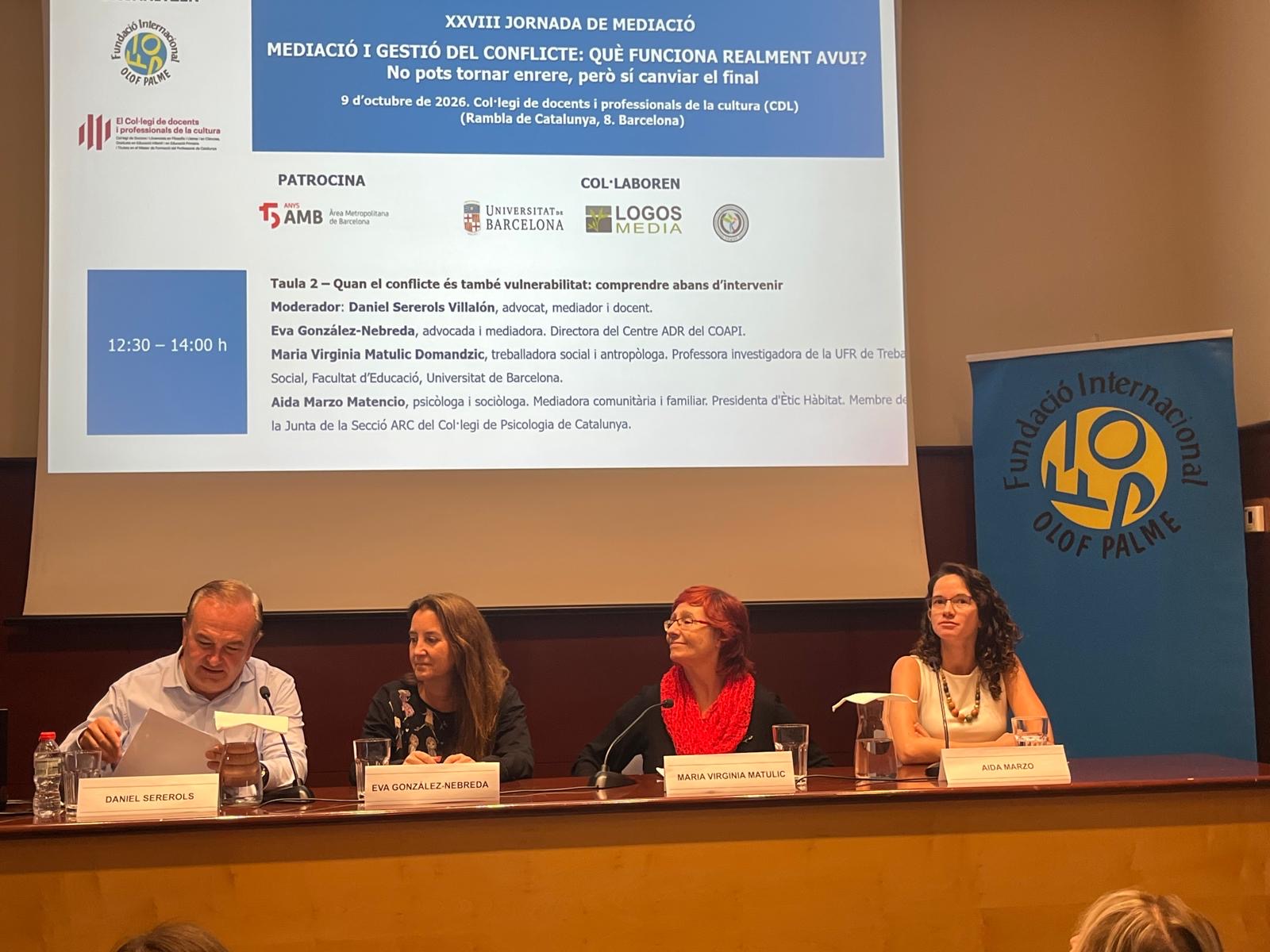
On 9 October 2026, I had the pleasure of taking part as a moderator in the 28th Mediation Conference, organised by the Olof Palme International Foundation and held at the Col·legi de Docents i Professionals de la Cultura (CDL) in Barcelona.
The conference, entitled “Mediation and Conflict Management: What Really Works Today?”, brought together professionals from mediation, law, social work and other fields involved in conflict resolution. The venue was packed, reflecting the continued interest in mediation and the importance of creating opportunities to share experiences and reflect on our professional practice.
I was particularly grateful to the Olof Palme International Foundation for inviting me to moderate one of the panel discussions. It was an opportunity to reconnect with fellow professionals, hear different perspectives and take part in a debate that I believe is especially relevant today.
What really works in mediation today?
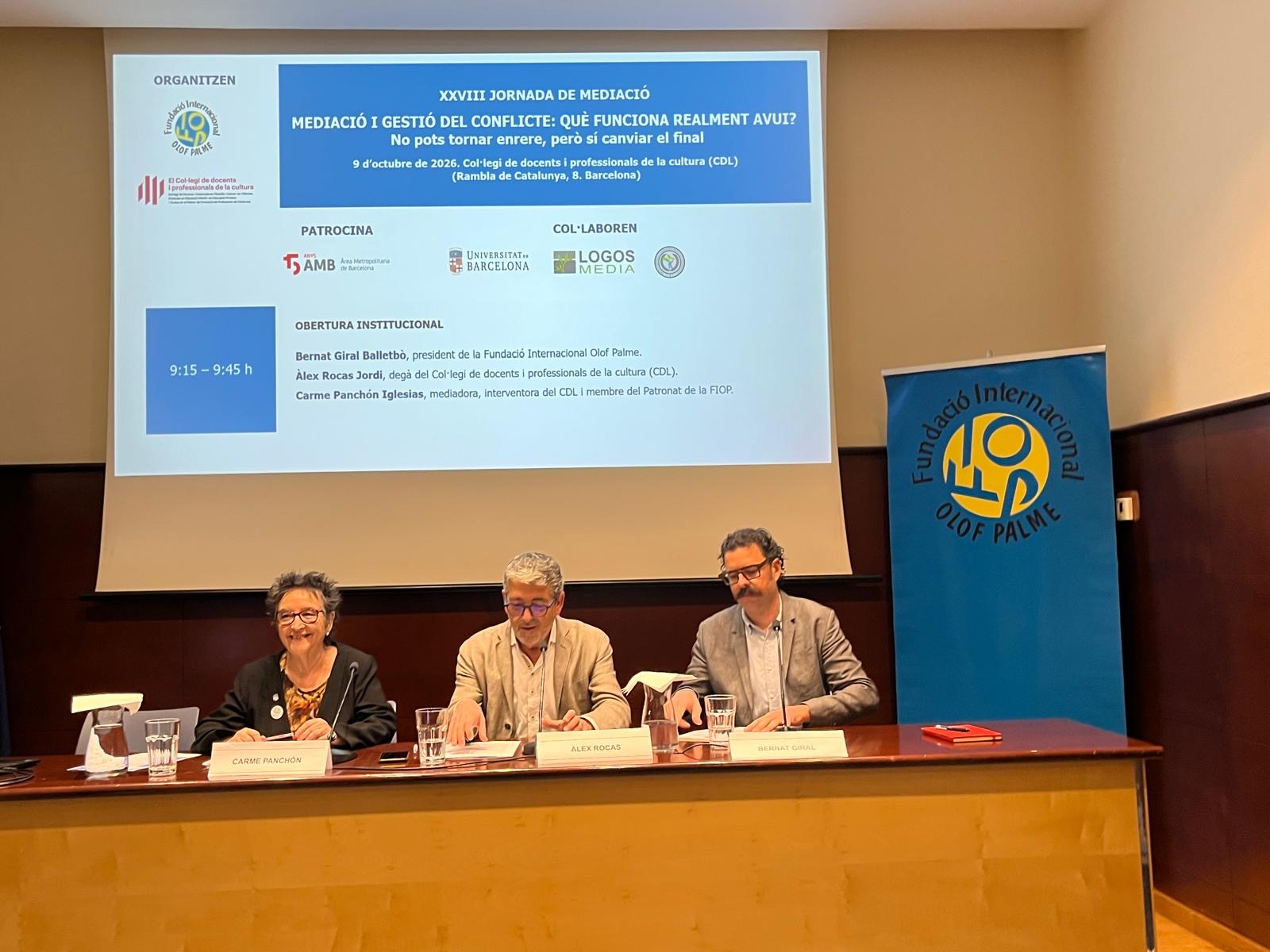
The conference opened with contributions from Bernat Giral Balletbò, President of the Olof Palme International Foundation; Àlex Rocas Jordi, Dean of the Col·legi de Docents i Professionals de la Cultura; and Carme Panchón Iglesias, mediator and member of the Foundation’s Board of Trustees.
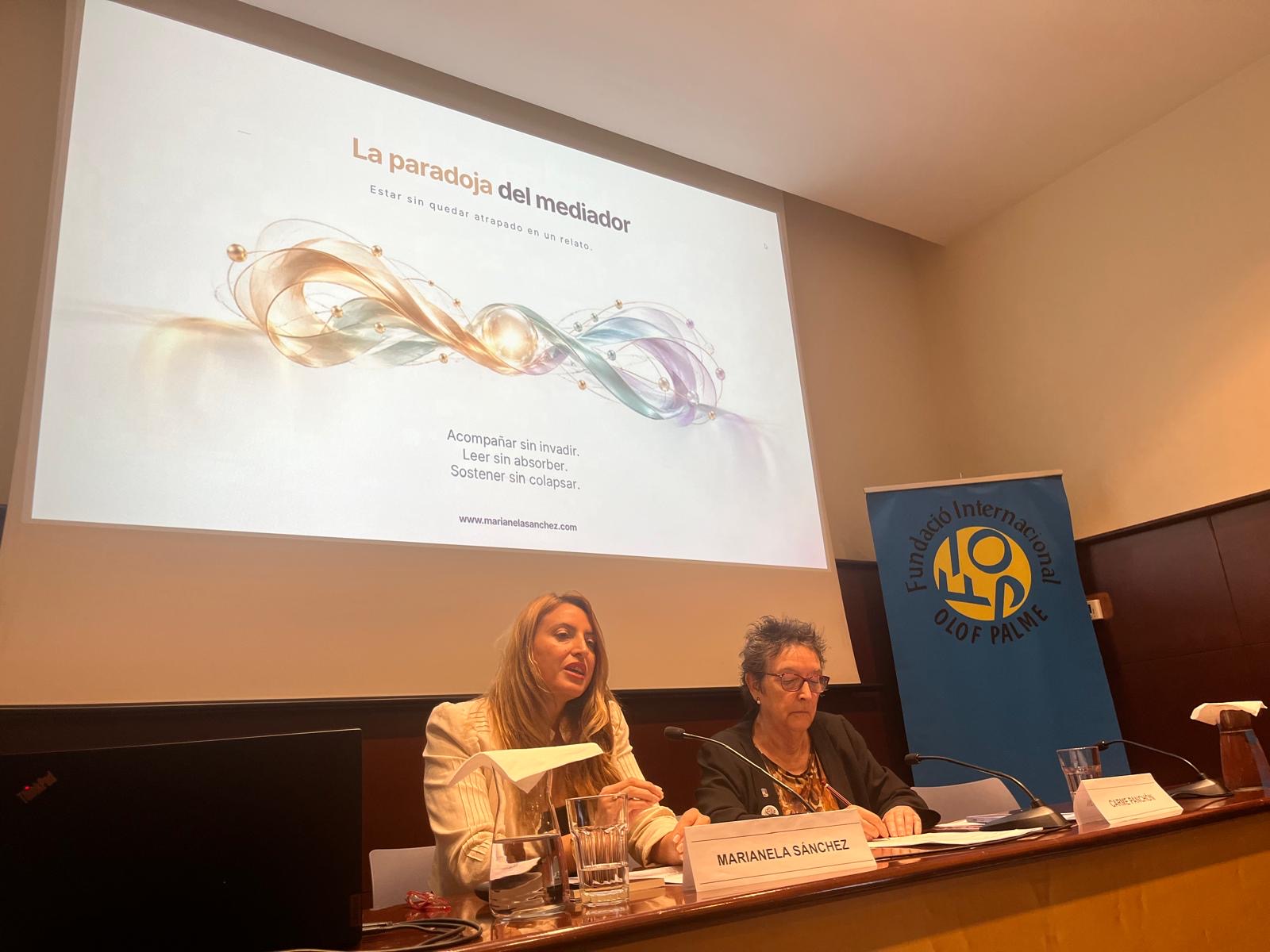
Carme Panchón also moderated the opening discussion with Marianela Sánchez, lawyer and mediator and Institutional Director of the Argentine School of Mediation. Their conversation explored the contributions of neuroscience and the challenges currently facing mediation.
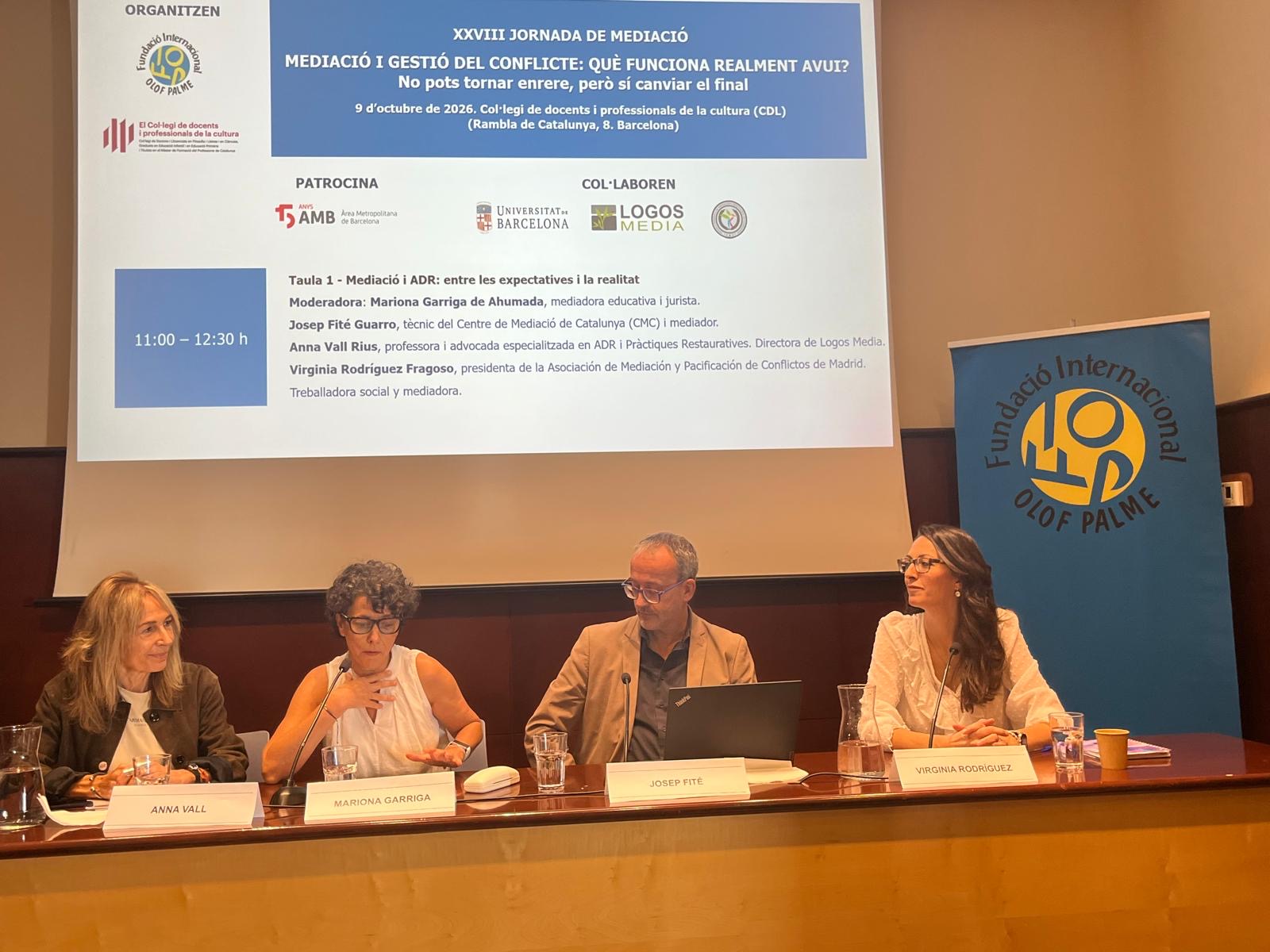
The first panel, “Mediation and Alternative Dispute Resolution (ADR): Between Expectations and Reality”, was moderated by Mariona Garriga de Ahumada. The speakers were Josep Fité Guarro, a professional at the Centre de Mediació de Catalunya; Anna Vall Rius, lawyer, lecturer and Director of Logos Media; and Virginia Rodríguez Fragoso, President of the Madrid Association for Mediation and Conflict Pacification.
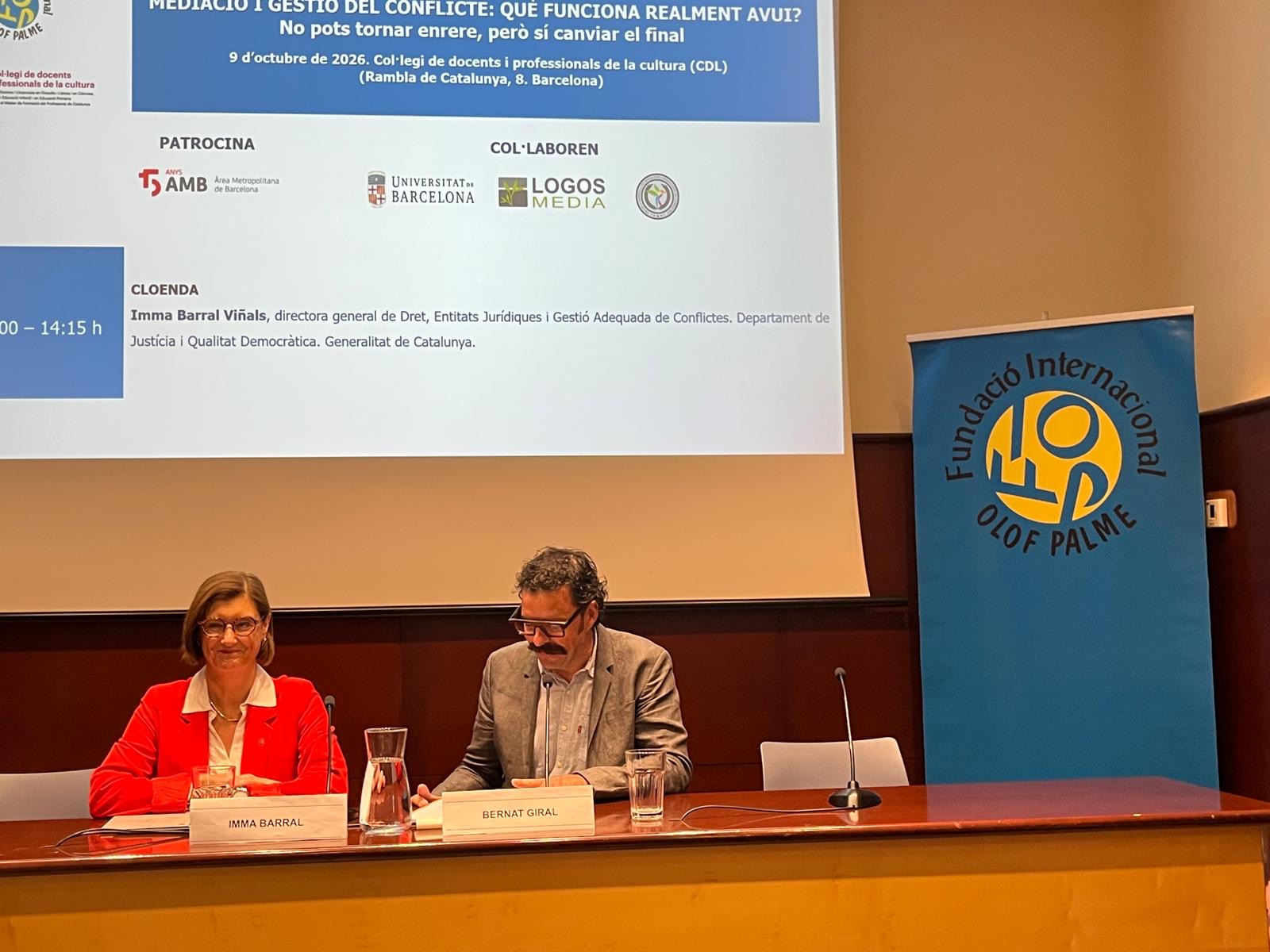
The conference concluded with an address by Imma Barral Vinyals, Director-General for Law, Legal Entities and Appropriate Conflict Management at the Department of Justice and Democratic Quality of the Government of Catalonia.
When conflict also involves vulnerability
The panel I had the honour of moderating was entitled “When Conflict Also Involves Vulnerability: Understanding Before Intervening”.
I was joined by three highly experienced professionals working in different but closely related areas of mediation.
Eva González-Nebreda, lawyer and mediator and Head of the ADR Centre at the Barcelona Association of Real Estate Agents, shared her experience in housing disputes, construction-related conflicts and neighbourhood relations.
Maria Virginia Matulič Domandzic, social worker, anthropologist and lecturer and researcher at the University of Barcelona, contributed a social perspective, particularly in relation to exclusion and vulnerability.
Aida Marzo Matencio, psychologist, sociologist, community and family mediator and President of Ètic Hàbitat, shared her experience in community mediation and situations where conflicts are influenced by personal, emotional or relational factors.
One of the issues we discussed was that people do not always enter mediation on equal terms. Behind an apparently straightforward dispute, there may be financial difficulties, dependency, fear, family problems, a lack of information or vulnerabilities that are not immediately apparent.
If we fail to take these circumstances into account, it becomes much harder to help those involved find an appropriate solution.
Impartiality does not mean ignoring imbalances
Of all the reflections that emerged from the panel, there is one I would particularly like to highlight.
What should a mediator do when one party is in a significantly weaker position than the other?
In mediation, we often talk about neutrality and impartiality, two essential principles of our profession. However, this does not mean overlooking differences in power, access to information or negotiating ability between the people involved.
I believe that one of a mediator’s responsibilities is to identify these imbalances and help address them, without taking sides or making decisions on anyone’s behalf.
Sometimes, it may be necessary to spend more time with one of the parties to help them better understand the situation. In other cases, the mediator may need to facilitate access to information, adapt the way sessions are conducted or recommend that the parties seek legal advice or assistance from other professionals.
The aim is not to favour one party at the expense of the other. It is to ensure that both can participate in mediation, express their interests and make decisions freely.
After all, an agreement is not necessarily balanced simply because both parties have signed it. How that agreement was reached also matters, as do the conditions under which the parties were able to negotiate.
Of course, some situations involve such significant imbalances that it becomes necessary to consider whether mediation is appropriate or whether other options should be explored.
A reflection that also applies to neighbourhood and business disputes
These issues are part of the everyday work of many professionals involved in conflict mediation in Barcelona.
In my work as a lawyer, mediator and conciliator in Barcelona, I deal particularly with neighbourhood disputes, conflicts within homeowners’ associations and residential communities, commercial and shareholder disputes, and conflicts within businesses and organisations.
In a residential community, for example, a neighbourhood dispute may be linked to personal circumstances of which we are unaware. In a family business, a financial disagreement may conceal years of communication difficulties. And in a dispute between business partners or shareholders, differences in access to information or decision-making power can significantly affect negotiations.
Every situation is different, and there are no universal solutions. That is precisely why it is so important to listen to the people involved, understand what lies behind the conflict and adapt the intervention to their needs.
Mediation is not about persuading the parties to reach an agreement at any cost. It is about helping them communicate, explore alternatives and, whenever possible, develop a solution they can freely accept.
A conference that offered an opportunity to keep learning
From the panel I moderated, I take away four ideas that sum up our discussion particularly well: identifying vulnerability, understanding the context, adapting the intervention and preserving people’s autonomy.
I would once again like to thank the Olof Palme International Foundation for inviting me to participate in the 28th Mediation Conference. My thanks also go to the Col·legi de Docents i Professionals de la Cultura for hosting the event; to Eva González-Nebreda, Maria Virginia Matulič Domandzic and Aida Marzo Matencio for their valuable contributions; and to everyone who attended and took part in the discussion.
It was a very rewarding day, both for the quality of the presentations and for the conversations with fellow professionals.
After many years working in conflict resolution, I remain convinced that there is always something new to learn. Events like this give us an opportunity to reflect on our practices and improve the way we support people when they need to resolve their differences.
Daniel Sererols Villalón
Lawyer, registered mediator and conflict conciliator based in Barcelona.
Neighbourhood and community mediation, homeowners’ association disputes, conflicts between business partners and shareholders, commercial and business mediation, organisational conflicts and out-of-court dispute resolution.
Phone: +34 661 463 306
Email: daniel@mediadorconflictos.com
Website: www.mediadorconflictos.com