
19 Apr New interview with Raúl Gómez Ojados, mediator in Cartagena
Cartagena and Barcelona, April 19, 2026
New interview with Raúl Gómez Ojados, mediator in Cartagena (Murcia)
“There is still a gap between the legal recognition of mediation and its effective implementation in professional and social practice. Bridging this gap constitutes one of the main challenges for the sector.” Raúl Gómez Ojados
Mediator and court expert Raúl Gómez Ojados analyzes the role of SINMECO, the debate on the confidential binding offer, and the key moment that mediation is experiencing in Spain, marked by the review of ADRs at the constitutional level.
At a particularly relevant moment for mediation in Spain, the debate around ADRs (appropriate dispute resolution methods) has acquired a top-level legal, professional, and institutional dimension.
To the recent consolidation of the Union for Mediation in Conflicts (SINMECO), with a nationwide vocation and presence in different autonomous communities, is added a context of intense reflection on the current model of access to justice. In this framework, it is worth highlighting the recent holding of a national meeting in Madrid, which brought together professionals from across the country.
At the same time, various legal institutions have publicly raised the need to review the mandatory nature of ADRs in certain areas, especially in family proceedings involving minors. Among them, the Madrid Bar Association, the Professional Association of Court Clerks, the Bar Associations of Madrid and Barcelona, and the Spanish Association of Family Lawyers have pointed out potential risks in terms of procedural delays and the protection of the best interests of the child.
These positions have also been reflected in the parliamentary sphere, through initiatives aimed at limiting or excluding the requirement to resort to ADRs prior to filing a lawsuit in certain types of proceedings.
Likewise, the debate has reached the constitutional level. The Constitutional Court has admitted for consideration a question of unconstitutionality regarding the obligation to resort to ADRs before filing a claim, considering that it could raise tensions with the right to effective judicial protection and the protection of minors. It will therefore be the Constitutional Court itself that must rule on the suitability of this model.
In this context, the professional sector has also expressed its positions. From SINMECO, critical reflections have been made on certain instruments introduced by Organic Law 1/2025, such as the so-called confidential binding offer, in relation to its compatibility with the inherent logic of mediation.
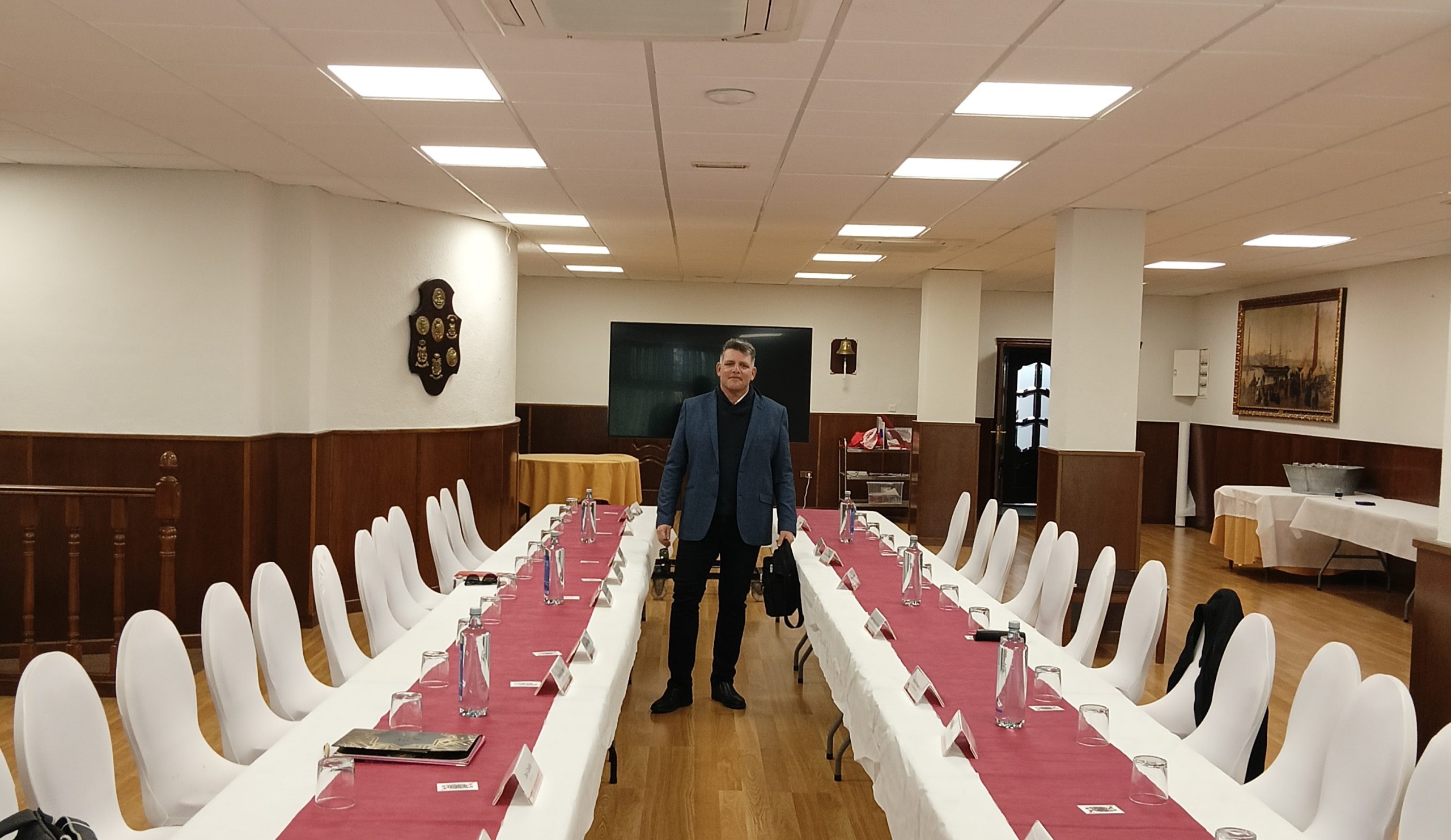
To analyze these issues, we speak again with Raúl Gómez Ojados, mediator and court expert in Cartagena, increasingly involved in the development and institutional projection of mediation in Spain, thus updating the interview we conducted with him on January 1 of this year.
Interview
- Raúl, what led you to become actively involved in SINMECO?
During a recent stay in Madrid, I was able to observe the high level of involvement of various professionals in promoting mediation at the national level. There is currently a network of representatives in different territories working actively to promote its awareness and development, especially given the still limited level of public familiarity with these mechanisms. - How would you define the need for a specific union for mediation professionals in the current context?
The existence of a structure such as SINMECO responds to the need to advance in the professionalization of the sector. It is a growing field that requires the consolidation of appropriate working conditions, the strengthening of specialization, and the guarantee of legal certainty in relations with the Administration and other stakeholders. All of this contributes to establishing the figure of the mediator as an independent and qualified professional. - What role does SINMECO aspire to play within the conflict resolution landscape in Spain?
SINMECO aspires to establish itself as a relevant actor in the promotion and structuring of mediation in Spain. Its activity is aimed at promoting a culture of agreement as a complementary alternative to judicial proceedings, fostering mediation in different areas (family, civil, commercial, community), promoting standards of quality and continuous training, and contributing to conflict prevention and the improvement of social cohesion. - Following the recent national meeting, what main conclusions would you highlight?
Among the main conclusions, the need to review certain recent regulatory instruments was highlighted, particularly regarding their alignment with the essence of mediation. It was also suggested that the legal value of certain agreements in specific areas could be strengthened in order to simplify procedures and reduce costs. - In your opinion, what are the main current shortcomings of the mediation profession?
Several relevant challenges remain, including the general lack of awareness about mediation, a certain degree of uncertainty in its practical application, and the need to strengthen trust in properly trained professionals. There is also room for improvement in coordination among different legal operators. - Do you think the mediator is sufficiently recognized within the current justice system?
Despite recent regulatory advances, especially following Organic Law 1/2025, there is still a gap between the legal recognition of mediation and its effective implementation in professional and social practice. Bridging this gap is one of the main challenges facing the sector. - Regarding the confidential binding offer, why has it generated debate within the sector?
The debate focuses on the need to preserve the intrinsic nature of mediation as a voluntary, confidential process based on the autonomy of the parties. Some professionals consider that certain instruments may require a more in-depth analysis to ensure their consistency with these principles. - Do you believe that the principle of good faith is being respected in access to ADRs?
The current regulatory framework reinforces the principle of good faith by requiring active participation rather than merely formal compliance. In this sense, the proper functioning of the system will largely depend on the conduct of the parties and the appropriate oversight by judicial bodies in cases of misuse. - What changes would be necessary to move towards a less judicialized model?
Key developments include strengthening ADRs as a preferred pathway, promoting education in conflict management skills, encouraging community mediation, simplifying legal language, and introducing incentives that favor out-of-court dispute resolution. - What professional demands do you consider to be priorities?
Priorities include establishing an adequate remuneration framework, enhancing the social visibility of mediation, promoting specialization and continuous training, improving the material conditions for service provision, and advancing towards greater cohesion within the sector. - Is there a real institutional will to promote mediation?
A progressive trend towards the integration of mediation into the justice system can be observed, particularly following the reforms introduced by Organic Law 1/2025. This process responds to the need to improve system efficiency and provide more agile and sustainable alternatives. - How do you assess the critical positions regarding ADRs in family proceedings involving minors?
This is a complex debate that highlights the need to balance different interests, particularly the protection of minors and the efficiency of the system. In this context, it is essential to continue analyzing the role that mediation can play in these cases, with appropriate safeguards. - Can the requirement to resort to ADRs create tensions with fundamental rights?
From a general perspective, mediation can be considered compatible with the right to effective judicial protection, as it does not prevent access to the courts but introduces a prior mechanism aimed at facilitating negotiated solutions. However, it will ultimately be up to the Constitutional Court to determine the final compatibility of the model. - How can the protection of minors be reconciled with a culture of dialogue?
Mediation makes it possible to focus the process on the needs of the minor, promote co-responsibility among parents, and avoid escalation of the conflict. Through adapted forms of participation and flexible agreements, it can contribute to more stable and less traumatic solutions. - How do you envision the future of mediation in Spain?
The future of mediation points towards greater integration into the justice system, increased professionalization, and a gradual cultural shift favoring dialogue as the primary means of resolving disputes. This will require strengthening trust in both the system and the professionals involved.
Closing
The current moment of mediation in Spain is one of significant evolution. Between regulatory momentum, debates about its practical application, and constitutional review, the sector faces the challenge of consolidating a balanced, effective, and reliable model.
The contribution of professionals such as Raúl Gómez Ojados helps to enrich this debate and to project the future development of mediation in our country, in a context where a culture of agreement is becoming increasingly relevant.
Cartagena and Barcelona, April 19, 2026
Contacts:
Raúl Gómez Ojados (Cartagena), tel. +34 603 03 89 88
Daniel Sererols Villalón (Barcelona), tel. +34 661 463 306