

30 May Jean Schmitz: A Legacy for Restorative Practices, Mediation and the Culture of Peace
Jean Schmitz: A Legacy for Restorative Practices, Mediation and the Culture of Peace
The international community of mediation, restorative justice and restorative practices has received with sadness the news of the passing of Jean Schmitz, one of the leading international figures in the field of peaceful conflict transformation and the building of more humane and respectful relationships.
Throughout his professional career, Jean Schmitz devoted his life to sharing knowledge, experience and humanity. He travelled extensively across many countries, delivering training programmes, facilitating dialogue processes and promoting a different way of understanding conflict, based on responsibility, repair of harm and the rebuilding of human relationships.
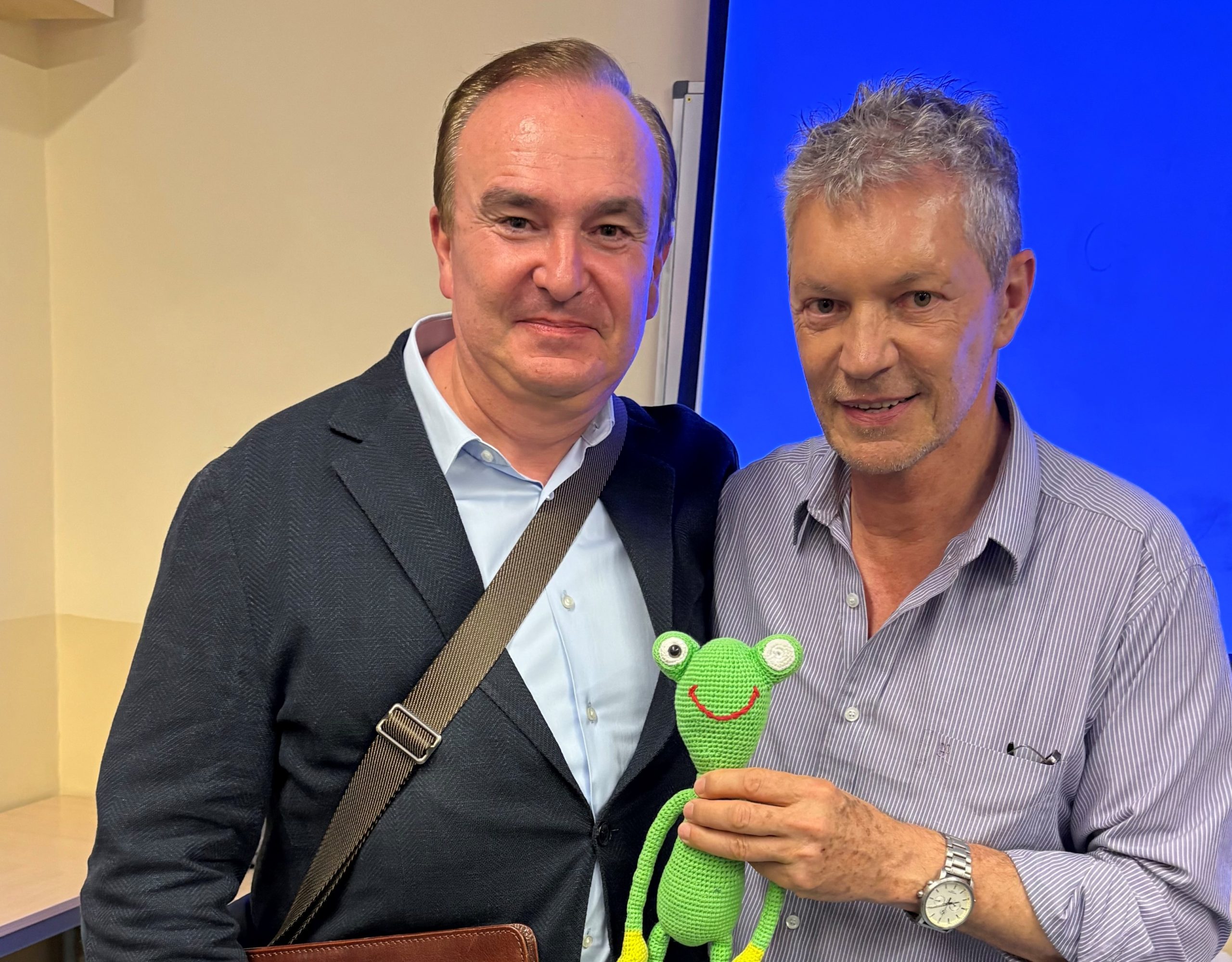
Picture: With Jean Schmitz during his visit to Barcelona in November 2025. A master of restorative practices, mediation and peacebuilding who left a profound mark on many people around the world.
I had the privilege of meeting him personally and participating in one of his last training programmes. Like so many others who had the opportunity to learn from him, I discovered that behind his international reputation stood a person who was approachable, generous and deeply committed to people.
Jean Schmitz understood that conflict is an inevitable part of human coexistence. However, he believed that the way we respond to conflict can make the difference between breakdown and restoration, between confrontation and learning, between punishment and healing.
Restorative practices, to which he dedicated a significant part of his professional life, invite us to place people at the centre of every process. They remind us that when conflict or harm occurs, the most important question is not simply who is to blame, but also what happened, who has been affected, what their needs are and what can be done to repair the consequences.
This restorative approach has demonstrated its value in a wide range of settings: schools, organisations, communities, social services, restorative justice programmes, institutions and mediation processes. Beyond specific methodologies, it represents a way of understanding human relationships based on listening, respect, shared responsibility and dialogue.
In a time often characterised by polarisation, confrontation and difficulty in listening to those who think differently, Jean Schmitz’s message is more relevant than ever. His work reminds us that a culture of peace is neither an abstract idea nor a distant goal. It is built every day through our conversations, our decisions and our ability to recognise the humanity of those around us.
Those of us who work in mediation know that conflicts do not disappear on their own. They require safe spaces for communication, listening and meaningful encounters. They require people willing to understand before judging and to build before destroying. This is precisely where one of the greatest contributions of restorative practices lies, and one of the most valuable lessons that Jean Schmitz shared over the course of several decades.
His legacy is not found solely in the courses, workshops and conferences he delivered. It also lives on through the thousands of people who continue to apply his teachings in schools, neighbourhoods, organisations, mediation services and restorative justice programmes throughout the world.
Many of those who had the privilege of meeting him will remember not only a brilliant professional, but above all a deeply human person. Someone who combined knowledge, experience and humility. Someone who understood that conflict transformation always begins with the transformation of relationships.
As a conflict mediator, I consider myself fortunate to have learned directly from Jean Schmitz. People pass away, but ideas, values and teachings remain. The best tribute we can pay to him is to continue promoting spaces for dialogue, active listening and shared responsibility wherever conflict exists. That is probably the best way to keep his legacy alive.
Today, we would like to express our gratitude for everything he contributed to restorative practices, mediation, restorative justice and the culture of peace.
May he rest in peace.
May his teachings continue to inspire us to build spaces for dialogue, coexistence, repair, understanding and peaceful conflict resolution wherever conflicts need to be addressed.
Thank you for everything, Jean.
Barcelona, 30 May 2026
Daniel Sererols Villalón
Conflict Mediator and Private Conciliator