

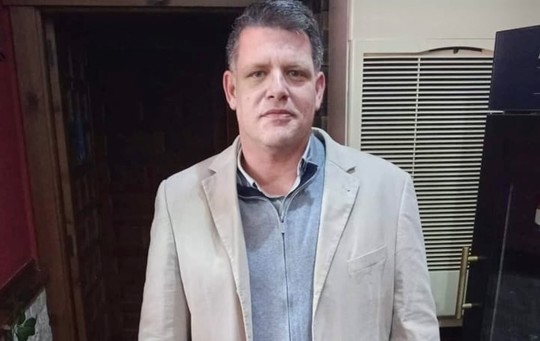
01 Jan Interview with Raúl Gómez Ojados, mediator and court expert in Cartagena
Interview with Raúl Gómez Ojados, mediator and court expert in Cartagena
Mediation in the Region of Murcia: dialogue, justice and future
Introduction. Mediation in Spain and the new legal framework
Mediation in Spain is going through a decisive moment. The entry into force of Organic Law 1/2025, which strengthens the Appropriate Means of Dispute Resolution (MASC) and introduces the requirement of admissibility (procedural prerequisite), has placed mediation at the center of the justice system. The legislator is committed to reducing litigation, easing the overload of the courts, and fostering a culture of dialogue, shared responsibility, and sustainable agreements.
In this new scenario, the work of mediation professionals in the territory takes on special relevance: those who work on the ground, collaborating with lawyers, courts, and institutions, and bringing mediation closer to the public. One of them is Raúl Gómez Ojados, a mediator and court expert based in Cartagena, an active figure in the promotion of mediation in the Region of Murcia, a frequent collaborator with legal operators, and someone with whom I share a friendship.
The Region of Murcia and the territorial context of mediation
The Region of Murcia is an autonomous community in southeastern Spain with an approximate population of 1.57 million inhabitants. It is characterized by a diverse economic fabric, significant agricultural, industrial, and service activity, and a territorial structure articulated around several relevant urban centers.
The city of Murcia, the capital of the community, has around 475,000 inhabitants, while Cartagena, a port city of great historical, economic, and cultural weight, exceeds 220,000 inhabitants. Both cities concentrate a large part of the judicial, administrative, and professional activity of the region.
From the judicial point of view, the Region of Murcia is organized into 11 judicial districts and, as in the rest of the State, faces a high workload in judicial bodies, especially in civil jurisdiction. This context makes the development and consolidation of civil, commercial, family, and community mediation particularly relevant as a complementary—and in many cases preferred—route to the judicial one.
Who is Raúl Gómez Ojados?
Raúl Gómez Ojados is a mediator, court expert, and legal consultant. In his professional practice, he combines conflict mediation, the drafting of expert reports, and close collaboration with lawyers, providing a technical, impartial perspective oriented toward the effective resolution of disputes.
With an office in Cartagena, Raúl has also participated in the dissemination of mediation, including interviews in local media, helping to bring this tool closer to the public and to normalize it as a real and effective option for conflict management.
The interview
To start with the most personal: who is Raúl Gómez Ojados when he is not mediating conflicts or preparing expert reports?
Raúl Gómez Ojados is a very humble and hardworking person who performs his job in a dealership in Cartagena and who for years has been training as a jurist as a vocation and professional path, and who in JANUARY 2024 began a Master’s in Civil, Commercial, Criminal, Labor, Community, and School Mediation following the Bill, and who very humbly carries out his work throughout the national territory.
Do you remember how and why you came to the world of mediation? Was it a vocational decision or the result of professional experience?
As a result of my training in the Law degree and the legal field, a fellow student at UNED raised the possibility of doing a Master’s in Mediation, training that I carried out with great enthusiasm and effort with the sole objective of conveying to the public what a mediation process is, and promoting and implementing it.
On your website you highlight values such as impartiality, rigor, and commitment. How are these values built in the daily practice of mediation?
These values are built through pedagogy, humility, and above all daily work and effort.
You offer mediation, court expert assessments, and legal consultancy. How do these facets complement each other in your work?
In the morning I carry out my job function in my company, finishing my workday at 1 p.m., and from that time on I carry out my consultancy, mediation, and legal service throughout the Region of Murcia, both by phone and in person.
You mediate in Cartagena, a city with its own identity. What is mediation like in Cartagena? What types of conflicts are most common?
In Cartagena, mediation is very reluctant except in specific cases and sporadically. I usually move around the area of Murcia, Alicante, Guardamar del Segura, Madrid; outside the Mediterranean area by phone, and mediations remotely.
If we broaden the view, how would you describe the current state of mediation in the Region of Murcia? Is it sufficiently implemented?
The current state of mediation in the Region of Murcia, with a lot of effort, pedagogy, talks in Neighborhood Associations, interviews in local media, little by little is bearing fruit.
Do you think the people of Murcia know about mediation or is it still largely unknown?
Little by little they are getting to know mediation as a result of the different actions I have been carrying out since the beginning of 2024.
Mediation and lawyers: necessary collaboration
You regularly collaborate with lawyers. What is the relationship between lawyers and mediators like today in the Region of Murcia?
Yes, but it has been hard, difficult work and with many hours, by phone, social networks since 2024 and above all through the Census of Lawyers one by one; there are many professionals who do refer to mediation and vice versa as well. That is, in Cartagena we have a street-level office, but normally 75% of mediations and collaborations are carried out with professionals from the districts of Cartagena and the Valencian Community, and on occasions I even travel outside the Region of Murcia.
From your experience, what does mediation bring to the professional practice of law?
Mediation provides the legal profession with an alternative, faster, more economical, and less adversarial way to resolve conflicts, allowing lawyers to advise their clients in the search for consensual and satisfactory solutions, maintaining control of the process and reducing procedural risks, while strengthening their role as facilitators of agreements and preserving the lawyer-client relationship, fostering client satisfaction and loyalty.
What would you say to those lawyers who still view mediation with suspicion or as a threat to their work?
That they should trust the professionals dedicated to mediation; ideally each Law Firm should collaborate or have an assigned mediator, always respecting the duty of confidentiality, impartiality, and professional secrecy.
How do you assess the role of the Murcia Bar Association in promoting mediation? Is there a fluid relationship with mediators?
At the beginning of the entry into force of the Law, it was very little collaborative. As you know, there is a Judicial Neutral Point Department that intrajudicially and ex officio provides mediation and advice within the court itself.
I hope that one day criminal mediation will be implemented ex officio in such a way that when the lawyer attends ex officio a mediator is also appointed to mediate between the offender and the authority, especially in the case of minor offenses: robbery, theft, narcotics, and when the offender has no means and community service is imposed.
Organic Law 1/2025 and the admissibility prerequisite
Organic Law 1/2025 has brought an important change. After its first year of application, what assessment do you make as a mediator?
In civil proceedings, in certain cases of squatters/tenant-squatters and debtors, the situation is becoming chaotic. But that chaos does not come from the mediation process itself, but from the actions of judicial operators when assessing compliance with the admissibility prerequisite.
In practice, differing criteria are being applied by the Court Clerks (LAJ). Some consider the mere sending of an email that appears as read by the recipient—whether the debtor or the tenant-squatter—to be sufficient. Others, on the other hand, consider that electronic proof of delivery after sending a burofax—even if it is not collected by the recipient—is sufficient.
All of this contrasts with what the rule establishes, which is precise on this point: it is enough to prove communication to the recipient by reliable means, both electronically and by other means of communication, in order to consider the admissibility prerequisite fulfilled and avoid the claim being declared inadmissible.
The admissibility prerequisite requires attempting a MASC before going to court. Do you think this will promote real mediation or is there a risk it will become a mere formality?
It will promote real mediation when the public becomes aware of what a mediation process implies: less costly, more effective, and in many cases with a final mediation record which, through a notary, has full legal validity in case of non-compliance.
Is the system—professionals, courts, institutions—prepared for this cultural change?
Many legal professionals are prepared, but if we look at social networks they want to exclude mediation and try to repeal Law 1/2025, when it would be a transposition of a Community Directive with subsequent repercussions before the CJEU. Mediation is not unconstitutional as is proclaimed on social networks; we need to give it time and observe its effectiveness.
Professional experience and learning
Without going into confidential details, is there any mediation process that has marked you especially?
A neighborhood mediation case in the Alicante area marked me, which due to professional secrecy and confidentiality I cannot transcribe, but thanks to the mediation process the person who requested it has not had the slightest problem again.
What is the most difficult thing to explain to a person who comes to mediation for the first time?
The most difficult thing to explain to someone new to mediation is the voluntary and confidential nature, the need to give ground (it is not a trial), and that the mediator is impartial and does not take sides, as well as emotional management, helping them differentiate between expressing their pain and building a solution, and helping them see that they should focus on the future and not only on the past in order to reach an agreement.
And what is the most satisfying thing when a mediation process works?
That thanks to your work you have solved a problem with full satisfaction of both parties and, as a result of that action, they turn to you for other matters of greater scope.
Dissemination, media, and pedagogical vocation
You have participated in interviews on local TV stations in Cartagena. What has the experience been like explaining mediation to the general public?
Very fruitful and satisfying, with the objective very humbly of raising awareness and sensitizing the public.
Do you think the media can play a more active role in disseminating mediation?
Yes, but due to lack of knowledge, if you do not have good training and planning they do not engage in dissemination.
I know you have pedagogical concerns. Do you consider a more direct involvement in teaching or training in mediation? How would you like to do it?
I would like to apply my experience to train future mediators, but I cannot find an institution to do it. Only in Barcelona through Logos Media, with whom I am in continuous contact for its good team of professionals, currently waiting.
Looking to the future
How do you imagine mediation in Spain within five or ten years?
Fully implemented and with the courts unclogged.
What do you think mediation needs to become definitively consolidated in regions like Murcia?
Support, dissemination, awareness, and trust from legal operators and institutions.
To finish, if you had to define mediation in a single sentence, what would it be?
Mediation is a voluntary process where a neutral third party guides parties in conflict so that, through dialogue and negotiation, they find and agree on a mutually acceptable solution, restoring communication and resolving the dispute without the mediator imposing a decision.
Conclusion
Mediation is in a stage of consolidation and challenge. Organic Law 1/2025, the admissibility prerequisite, and the growing institutional interest have opened a historic opportunity to transform the way society deals with conflicts. However, its success will depend to a large extent on committed professionals, collaboration with the legal profession, and a determined commitment to pedagogy and dissemination.
From cities like Cartagena and territories like the Region of Murcia, professionals like Raúl Gómez Ojados show that mediation is not only an alternative to litigation, but a different way of understanding justice: closer, more humane, and effective.
Professional contact:
Raúl Gómez Ojados, mediator and court expert in Cartagena
📞 Tel. 603 03 89 88
📧 mediadorjudicial45@gmail.com